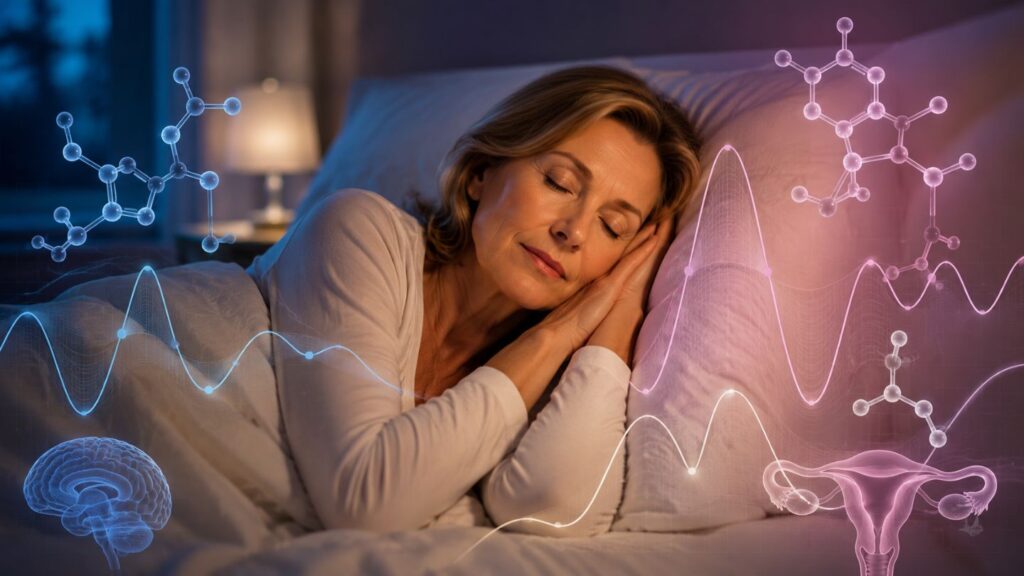
If you are doing everything right at bedtime and still waking up tired, your hormones may be the missing piece of the puzzle. Sleep is not just a habit. It is a biological process orchestrated by chemical messengers, and when those messengers fall out of rhythm, even the best sleep hygiene can fall short. This blog covers how cortisol, progesterone, and estrogen each shape the quality of your rest, the warning signs that hormones may be working against you, and when it makes sense to explore hormone replacement therapy as a solution.
Key Takeaways
- Cortisol should peak in the morning and fall at night; a disrupted rhythm makes deep sleep difficult.
- Progesterone has a naturally calming effect that helps the body fall and stay asleep.
- Declining estrogen is linked to night sweats, frequent waking, and lighter sleep.
- Persistent sleep problems alongside other symptoms may point to a hormonal imbalance.
- HRT, guided by lab testing and medical supervision, may help restore healthier sleep patterns.
How Hormonal Imbalance Affects Sleep Quality
Sleep runs on rhythm, and hormones set the tempo. Understanding how hormonal imbalance affects sleep quality starts with a simple idea: your body relies on precisely timed chemical signals to wind down at night, cycle through sleep stages, and wake feeling restored. When those signals fire at the wrong time or in the wrong amounts, the whole sequence gets thrown off, no matter how disciplined your bedtime routine is.
This is why hormone-related sleep trouble can feel so frustrating. You may fall asleep easily but wake at 3 a.m. wide-eyed, or sleep a full eight hours and still feel drained. These patterns often trace back to specific hormones, and three of the biggest players are cortisol, progesterone, and estrogen. Each one influences your nights in its own distinct way.
Cortisol and Sleep: When Your Stress Hormone Won’t Clock Out
The relationship between cortisol and sleep is all about timing. Cortisol is your body’s primary stress hormone, and in a healthy rhythm it surges in the early morning to help you wake up, then declines steadily through the day so melatonin can take over at night. Chronic stress, irregular schedules, and hormonal shifts can flatten or reverse that curve, leaving cortisol elevated exactly when your body needs it lowest.
The result is that familiar tired-but-wired feeling: exhausted all day, then strangely alert the moment your head hits the pillow. Supporting a healthy cortisol curve often begins with daytime habits, and building the perfect morning routine to optimize hormones and energy naturally can go a long way toward anchoring that rhythm. Morning light, consistent wake times, and smart caffeine timing all help teach cortisol when to rise and when to rest.
Progesterone and Sleep: Your Body’s Natural Calming Signal
Few hormones are as directly tied to restfulness as progesterone. The link between progesterone and sleep comes from the way this hormone interacts with calming receptors in the brain, producing a gentle sedative-like effect that helps the nervous system downshift. When progesterone levels are healthy, falling asleep tends to feel easier and sleep itself tends to feel deeper.
Progesterone naturally fluctuates across the menstrual cycle and declines significantly during perimenopause and menopause. Many women notice their sleep changing before they connect it to hormones at all. Restlessness, difficulty falling asleep, and more frequent waking during certain weeks of the month or certain seasons of life are common clues that progesterone may be trending downward. Because the shift is gradual, it is easy to blame stress or age when the real driver is a measurable change in hormone levels.
Read More: Signs You Need Hormone Replacement Therapy
Estrogen and Sleep: More Connected Than Most People Realize
The connection between estrogen and sleep is broad because estrogen touches so many systems at once. It helps regulate body temperature, supports serotonin activity, and influences how the brain moves through sleep stages. When estrogen declines, the body’s internal thermostat becomes less stable, which is why night sweats and hot flashes are among the most disruptive sleep complaints during the menopausal transition.
Lower estrogen is also associated with lighter, more fragmented sleep and a harder time returning to sleep after waking. Add in the mood effects that can accompany estrogen shifts, and it is easy to see how a single hormone can quietly reshape your nights over the course of months or years. Many women describe it as sleep slowly losing its depth, where they technically spend enough hours in bed but rarely wake feeling truly refreshed.
How Do Estrogen and Progesterone Impact Sleep Together?
It is worth asking how estrogen and progesterone impact sleep as a pair, because these two hormones work as partners rather than solo acts. Estrogen keeps temperature regulation and brain chemistry steady while progesterone provides the calming signal that eases you into rest. When both decline together, as they do in perimenopause, the effects compound, which explains why sleep disruption is one of the earliest and most common symptoms women report during this stage of life.
Can HRT Help With Sleep?
So, can HRT help with sleep? For many adults whose sleep problems stem from hormonal decline, the answer may be yes. By restoring hormones to healthier levels under medical supervision, hormone replacement therapy may reduce night sweats, support a calmer nervous system at bedtime, and help rebuild the deeper, more continuous sleep architecture that declining hormones disrupt. For patients who have spent years cycling through sleep apps, supplements, and blackout curtains without lasting relief, addressing the underlying hormonal cause can feel like finally treating the problem instead of the symptoms.
The keyword is personalized. Effective treatment starts with comprehensive lab testing to identify exactly which hormones are out of range, followed by a plan tailored to your levels, symptoms, and health history. If you want to understand what that process involves from start to finish, the complete guide to hormone replacement therapy walks through how modern HRT is evaluated, prescribed, and monitored.
What Better Sleep Actually Looks Like After Treatment
Patients often ask what improvement feels like once hormones are properly supported. It rarely happens overnight, and that is a good thing, because gradual change tends to be lasting change. Over the first weeks and months of a well-managed plan, many people notice they fall asleep with less effort, wake fewer times during the night, and stop dreading the 3 a.m. stare at the ceiling. Mornings begin to feel like mornings again instead of a slow climb out of fog.
The ripple effects extend well past the bedroom. Consistent, quality sleep supports memory, mood stability, immune function, workout recovery, and even how the body manages hunger hormones during the day. This is why providers treat sleep as a vital sign rather than an afterthought. When your rest improves, nearly every other health goal becomes easier to reach.
Read More: The Magnesium-Sleep Connection: Natural Solution for Deeper Rest
Signs It May Be Time to Look Deeper

How do you know when poor sleep is a hormone issue rather than a habit issue? A few patterns stand out. Sleep trouble that arrives alongside other changes, such as low energy, mood swings, brain fog, hot flashes, or stubborn weight changes, suggests something systemic is going on. So does sleep disruption that tracks with life stages like perimenopause, menopause, or andropause in men.
Timing is another clue. If your sleep declined gradually over months despite consistent habits, hormones deserve a closer look. And because hormones influence far more than rest, addressing an imbalance often improves several areas at once. Many patients researching treatment are surprised to learn how hormone replacement therapy may support weight loss alongside better sleep, since metabolism and rest are so closely intertwined.
Reclaiming Your Nights, One Hormone at a Time
Restful sleep is not a luxury, and it should not require guesswork. Cortisol, progesterone, and estrogen each play a distinct role in how easily you fall asleep, how deeply you stay asleep, and how restored you feel in the morning. When those hormones drift out of balance, no amount of chamomile tea or sleep tracking will fully fix the problem. The good news is that hormonal sleep disruption is identifiable through proper testing and responsive to the right medical care.
Demigod Health and Wellness provides personalized hormone replacement therapy that Fort Lauderdale residents trust for restoring balance, energy, and quality rest. Our care extends beyond HRT with functional regenerative medicine, concierge medicine, Ipamorelin therapy, and BPC-157 to support your health from every angle. Contact us to schedule a consultation and find out what your hormones are really doing while you sleep.
